
Women Changed the World. It Is Time We Started Acting Like It.
Okay, friend. Pull up a chair. I need to talk to you about something.
Every March, we celebrate Women's History Month. We post the quotes, share the throwback photos, maybe catch a documentary or two. And then April rolls around and we move on.
But here is what keeps me up at night: the women who changed this world never stopped being relevant just because the calendar flipped. Their stories are not a once-a-year moment. They are a daily reminder of what is possible when we stop deciding in advance who gets to dream big.
And right now? We still have a lot of deciding to undo.
These Women Existed. The World Just Did Not Amplify Them.
When I was writing my 2017 book "Embracing Differences: 21st Century Women Debunking Stereotypes," I kept running into the same gut punch over and over again. Women who had done absolutely extraordinary things, quietly, without the fanfare that their male counterparts received for doing far less.
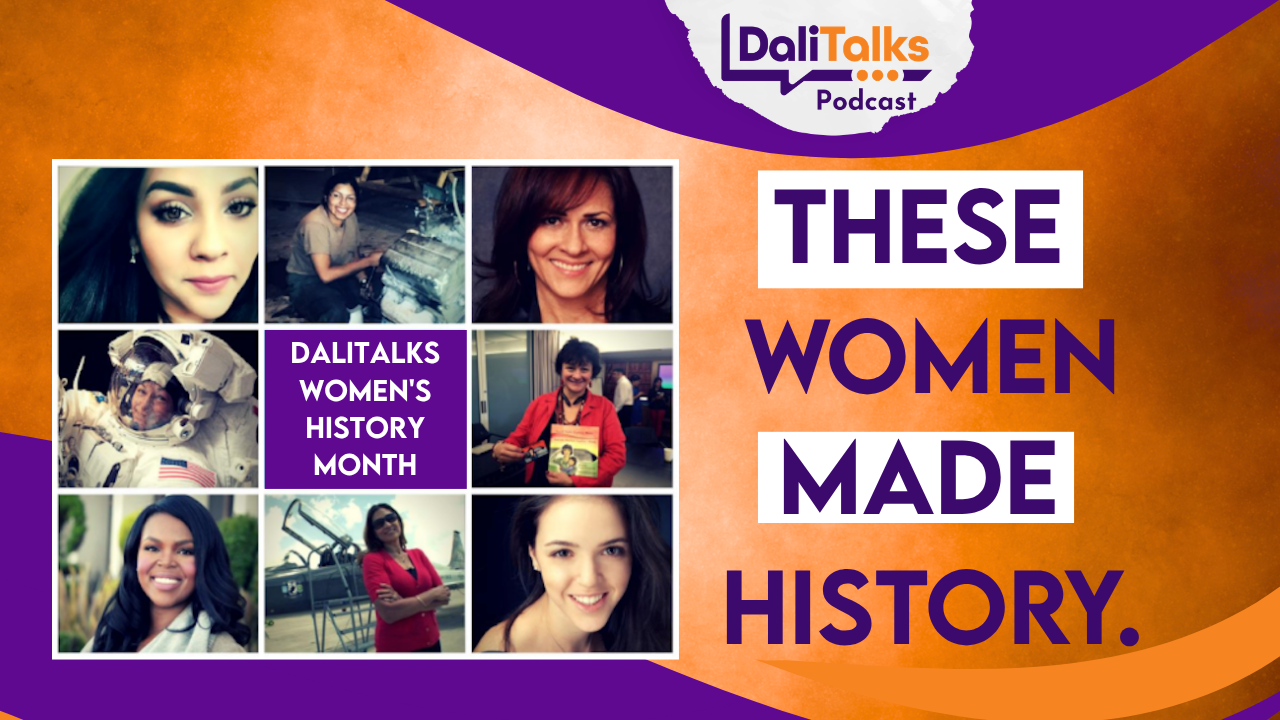
Olga Custodio became the first Latina to complete U.S. Air Force military pilot training and the first Latina captain of a commercial airliner at American Airlines. Do your kids know her name? Does yours?
Peggy Whitson applied to NASA for 10 years. Ten years of rejection before she became the first woman to command the International Space Station. Ten years. Let that sink in.
Simone Manuel stood on that Olympic podium in Rio in 2016 and made history as the first Black American woman to win an individual gold medal in swimming. A sport that has its own long and painful history of exclusion when it comes to Black athletes.
Misty Copeland fought her way into a world that told her her body was wrong, her background was wrong, and her dream was too big. She became the first African American female principal dancer with a major American ballet company anyway.
Isabella Springmuhl Tejeda, a young woman with Down Syndrome from Guatemala, walked into the global fashion industry at 19 years old and demanded her place in it.
Aja Brown was elected mayor of Compton at 31, defeating 12 other candidates, becoming the youngest and first woman to lead that city.
These are not feel-good footnotes. These are women who reshaped industries, broke ceilings that were not supposed to break, and did it while navigating systems that were simply not built with them in mind.
Let Us Talk About the System, Because It Is Real.
Here is where I want to be really clear with you, because I know this conversation can get tangled fast.
This is not about flipping roles. It is not about women rising so men can fall. It is not about dominance or revenge or deciding one gender is more valuable than another.
It is about this: the doors that open easily for some should open just as easily for all.
When a woman has to apply to NASA for 10 years before getting a yes, while equally qualified men move through that same process faster, that is not a personal failure. That is a systemic one.
When girls grow up seeing almost no one who looks like them in aviation, in STEM, in the C-suite, in the halls of government, they start self-selecting out of dreams before they ever really begin. Not because they are not capable. Because the message they keep receiving is that those spaces were not made for them.
That is what systemic bias looks like in real life. It is quiet. It is embedded. And it compounds across generations.
Women are still paid less for the same work. Women, particularly women of color, face higher rates of discrimination in hiring, promotion, and leadership. Mothers are penalized professionally in ways that fathers simply are not. Women in male-dominated fields still face cultures that question whether they belong there at all.
None of that is about men being villains. Most of it is not even conscious. It is the accumulated weight of centuries of assumptions about who leads, who builds, who invents, and who stays home.
And we can choose to interrupt it. Together.
So What Can You Actually Do? A Lot, Actually.
I know it can feel overwhelming. Where do you even start when the problem feels this big? You start exactly where you are. Here is how.
Say her name. Out loud. At the dinner table. In front of your kids. When you learn about a woman who did something remarkable, say her name. Tell the story. Make it normal to know these names the way we know the names of the men in our history books.
Audit what your kids are consuming. What books are on their shelves? Who are the heroes in the shows they watch? Representation is not a buzzword. It is the quiet architecture of what children believe is possible for themselves and others. Fill their world with stories of women who built, led, invented, and refused to quit.
Mentor and sponsor women in your circle. If you are in a position of influence at work, use it. Recommend women for opportunities. Advocate for them in rooms they are not in yet. Mentorship is powerful. Sponsorship is transformative.
Support women-owned businesses. Especially businesses owned by women of color. Where your money goes is a values statement. Make it count.
Challenge the language. When someone makes a joke about a woman being "too emotional" to lead, or "too ambitious" for her own good, say something. Gently, firmly, consistently. Culture shifts one conversation at a time.
Raise your sons alongside your daughters. Teach your boys to value women's contributions, to share the emotional labor at home, to see women as equals in every room. Equality is not a women's issue. It is a human one.
And listen. Truly listen to the women in your life when they tell you about the barriers they are navigating. Believe them. Do not minimize. Do not explain it away. Just listen and then ask how you can help.
This Is for Your Kids Too.
I spent 10 years in the U.S. Army as a mechanic and drill sergeant. I fixed aircraft. I trained soldiers. I showed up in spaces where people did not always expect to see someone like me.
And then I found my voice through women and gender studies and I have never stopped using it. Because I know what it feels like to wonder if there is a place for you. And I know what it feels like when someone hands you proof that there is.
That proof matters. Those stories matter. The women I have been spotlighting are not just history. They are a blueprint.
Your kids are watching right now to see who gets celebrated, who gets believed, who gets the opportunity. Let them watch you choose to expand that circle.
Because a world where women have the same opportunities as men is not a world where men lose anything.
It is a world where we all finally stop leaving so much genius on the table.
Want to hear the full stories of these incredible women? Listen to the latest episode of The DaliTalks Podcast, "Women Who Changed the World (And the World Forgot)," wherever you get your podcasts.
And if this post moved you even a little, share it. These conversations are how we build something better, together.
