The One Skill Nobody Taught Us That Changes Everything
The One Skill Nobody Taught Us (That Changes Everything)
Most of us grew up learning how to speak. How to argue. How to present. How to debate.
Nobody taught us how to listen.
And that gap, quiet as it is, costs us more than we realize. In our relationships. In our parenting. In our workplaces. In the moments that matter most.
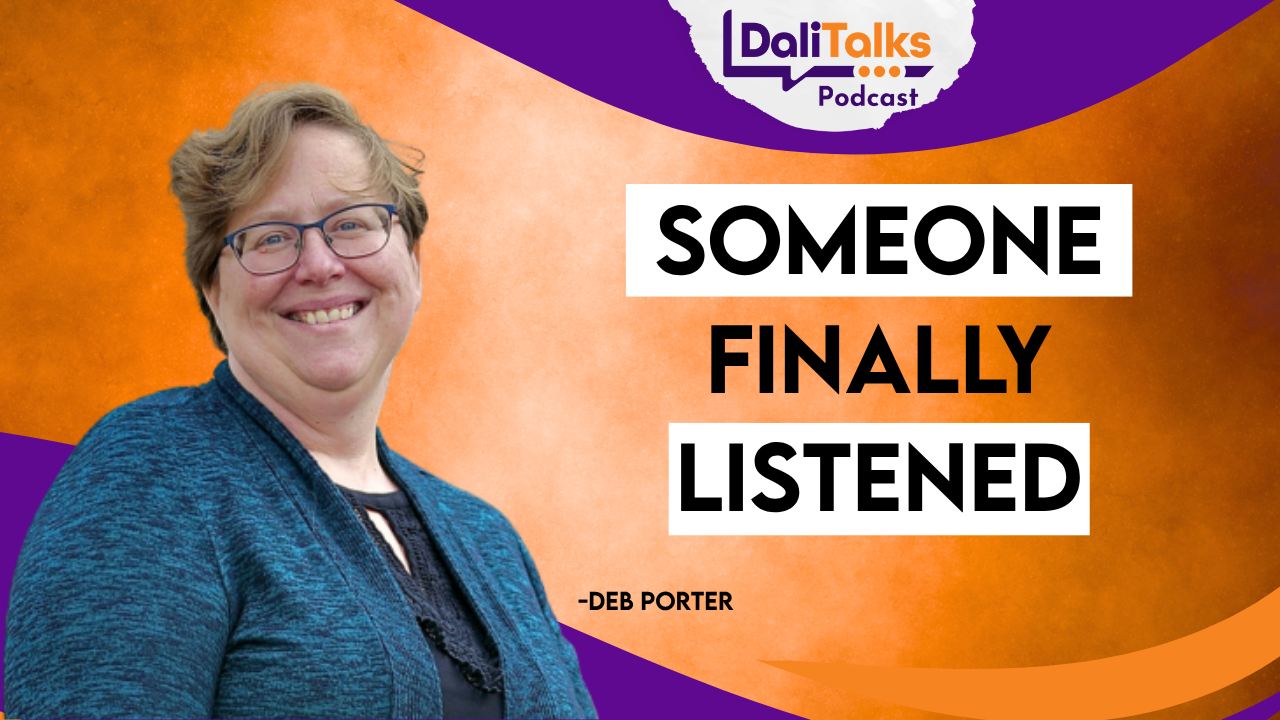
I sat down recently with Deb Porter, founder of Hold Hearing Out Life Drama and a professional listener, and what she shared stayed with me long after we stopped recording.
Listening Is a Profession. And There's a Reason for That.
Deb did not set out to become a professional listener. She studied divinity, worked at a funeral home, and one ordinary afternoon while folding towels, a thought landed: what if it's just about listening?
She built an entire business from that moment.
Not therapy. Not coaching. Listening.
The distinction matters. There is a massive group of people, and you probably know some of them, who are not in crisis. They are not looking for a diagnosis or a treatment plan. They just need someone outside the situation to hear them clearly, without judgment, without advice, and without an agenda.
Family and friends are often too close to the problem. Or they are the problem.
That is the gap Deb fills.
What Most People Are Carrying Right Now
When I asked Deb what she is seeing most from the people who come to her, her answer was immediate.
Overwhelm.
Not one hard thing. The pile up. That slow accumulation where you handle the first thing, then the second, and by the time the fifth or sixth lands, the snowball is already rolling and you cannot get ahead of it.
Sound familiar?
Most people do not reach out for support until they are already buried. Part of that is stigma. Part of it is not knowing what kind of support they actually need. And part of it is not having someone safe enough to go to.
That is exactly why conversations like this one matter.
The CORE Framework: What Listening Actually Looks Like
Deb teaches an online course called Listen Your Way to Deeper Connections, and she shared the framework at its center. She calls it CORE.
C is for Calm. If you are not regulated going into a conversation, you cannot hear the other person. Full stop. If you lose your calm during the conversation, pause it. Come back when you can actually be present.
O is for Outcome. Before you try to help, ask what the other person actually needs. Are they venting? Are they working through a problem to find their own solution? Are they looking for ideas? Most people know what they need if you take the time to ask.
R is for Relate. This is the largest piece of the framework. Body language, the questions you ask, the way you make someone feel seen in real time. Relating is not passive. It is an active, practiced skill.
E is for Empathy. Not pity. Not fixing. Simply communicating: I see you, I care about you, and what you are going through matters.
Simple framework. Profound in practice.
What It Looks Like to Actually Practice What You Teach
Deb shared something personal that I think every parent, every partner, every leader needs to hear.
When her son, at 17, came to her and said he wanted to enlist in the military and needed her to sign the paperwork, she felt everything at once. Fear. Resistance. The urge to react.
Instead, she stopped and said: I hear that this is important to you. I cannot hear you right now because all I can hear is myself. Let me come back when I am calm.
They paused the conversation. Days later, her son asked if she was ready. She was honest: she was still working on it.
And when she finally came back, she came back with intention. She told herself: this matters to him, and he matters to me. I am going to sit in the discomfort of hearing him out because that is what love looks like.
That is not just a parenting moment. That is emotional leadership in real time.
Why This Matters in Every Area of Your Life
Deb made a point near the end of our conversation that has stayed with me.
Most people understand that communication is important. What most people do not understand is that listening is actually the first piece. Get the listening right, and the speaking opens up. The connection follows.
This applies to every relationship you have. The ones at home. The ones at work. The ones you lead.
And here is what I want you to walk away with today: listening is not a personality trait you either have or you do not. It is a skill. It is learnable. By anyone. At any point in life.
Deb said it herself, and I believe her: it is worth doing.
Want to Go Deeper?
Listen to my full conversation with Deb Porter on The DaliTalks Podcast. We get into her story, the CORE framework, her six session model, and a whole lot more.
Listen on Spotify: https://open.spotify.com/show/4T1R5GFmU4gXWyC9eqKEGS?si=3b59804a244f4c62 Listen on Apple Podcasts: https://podcasts.apple.com/us/podcast/the-dalitalks-podcast/id1613524529 Watch on YouTube: https://youtube.com/@DaliTalksPodcast
You can also connect with Deb directly at info@hearingoutlifedrama.com or find her on Instagram, Facebook, YouTube, Pinterest, and TikTok.
